Guides
Part of Sauce making mistakes: patterns and practical controls
Sauce making mistakes: How to run fault flights
Sauce making mistakes: how to catch faults early with coded samples, an unchanged reference, shared terms, and a checklist for tracing defects to process steps.
What to take away
- The question “sauce making mistakes how to catch them early” has a practical answer: use a fault flight to name defects at low intensity.
- Build the samples deliberately from one good base, so each sample differs in exactly one way.
- Use a fixed fault vocabulary. A shared word is what turns a tasting into a corrective action.
- Use safe, fresh flavor changes to represent defects; never use spoilage.
Build the set from one base
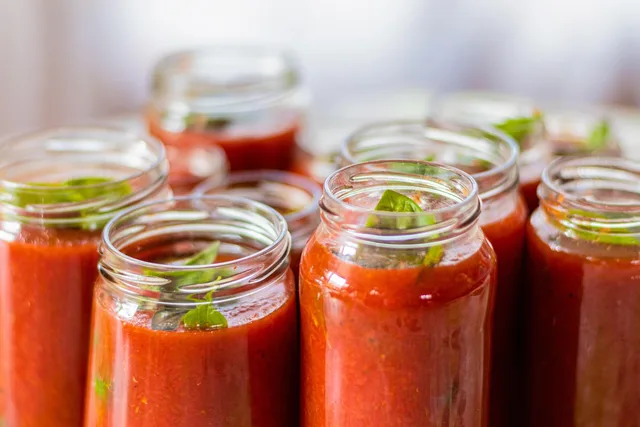
Use a smooth, simply seasoned tomato sauce as the base. Divide one correct batch into portions, then change one thing per portion, keeping the recipe and serving conditions consistent; the skill you want is catching a fault early rather than recognizing a disaster.
One Base, Seven Faults
Fault
- Over acid
- Add same vinegar
- Under acid
- Use less vinegar
- Over salt
- About a third above standard
- Oxidised
- Small amount of open oil
- Bitter
- Push aromatics further in pan
- Thin body
- Add water to measured dilution
- Scorched
- Take slightly too far on heat
Change from base
- Over acid
- Under acid
- Over salt
- Oxidised
- Bitter
- Thin body
- Scorched
Mistakes to build into the flight
These are common process faults to model with fresh portions of the base, changing one variable at a time. Treat the tasting as training, not as approval to change a validated shelf-stable process.
- Over-reducing:Evaporation concentrates salt and sweetness and thickens the sauce. Stop at the intended yield, then make final seasoning adjustments.
- Salting before a reduction:As water evaporates, the salt becomes more concentrated. Hold back some salt and adjust after reducing.
- Over-acidulating:Adding acid without tasting between additions can make a sauce sharp. Add measured amounts gradually and record what went into each portion.
- Burning aromatics or scorching herbs and garlic:Prolonged or excessive heat can create bitter, scorched notes. Lower the heat and add delicate aromatics later.
- Scorching on high heat:Sauce stuck to the pan can burn. Reduce the heat and stir and scrape the pan as the recipe requires.
- Collapsing an emulsion:Adding oil too quickly or blending inconsistently can leave an oily, broken sauce. Add oil gradually while blending consistently.
- Adding too much water:Unmeasured dilution can make a sauce thin and can alter a shelf-stable formula. Measure additions; any change to a validated product needs appropriate process review.
Keep a portion of the unchanged base as the reference. Code them all. Do not tell the tasters which is which. Coding is only half of it, since a set proves nothing unless the method has been checked, and a blind duplicate that scores differently invalidates the session.
Safety line for this exercise
Use fresh samples prepared and handled under your usual food-safety controls, and never taste a suspect jar or deliberately spoiled product. Keep tasting separate from preservation testing: under-acid samples do not establish shelf stability, and covered commercial acidified foods are subject to FDA requirements in 21 CFR Part 114. For shelf-stable products, follow a validated process and discard tasting samples after the session.
Fix a fault vocabulary
Agree on the words before the first sample. Define the core terms consistently: sharp = acid-forward; flat = lacking lift; salty = salt-dominant; bitter = a bitter finish; scorched = burnt notes; oxidized = stale or cardboard-like notes; thin = watery body; cloying = overly sweet or heavy; dusty = stale, powdery aroma; short = flavor that fades quickly. Add sauce-specific descriptors when relevant: broken = oil and water have separated in an emulsion; grainy; rancid oil; metallic; acrid; and astringent.
Fault Terms
- sharp
- flat
- salty
- bitter
- scorched
- oxidised
- thin
- cloying
A panel that reaches for the same word for the same defect can act on its own notes. The same words work on other people's products, and the faults that recur across a year of shipped jars are a free supply of examples nobody made on purpose.
Saltiness is a sensory judgment, while sodium content is a measurable property of the formula. Use tasting notes to diagnose perceived saltiness, and food-composition information to check sodium content. The USDA National Agricultural Library's overview of micronutrients links to food-composition databases and food-source lists for sodium and other minerals.
Train the panel with a repeatable method
Fault finding benefits from repeatable tests. NIST's Internal Auditing Best Practices describes an audit cycle that can serve as an analogy for recording findings, not as sauce-safety guidance or a sensory method. For sensory practice, use the triangle test described in ISO 4120, Sensory analysis — Methodology — Triangle test: serve coded portions that include a blind duplicate and ask tasters to identify the sample that differs. It tests whether tasters detect a difference, not which sample is better or what caused it.
Before group discussion, have each taster record the selected sample, descriptor, and intensity. Then reveal the intended change and compare notes against the known sample change; this helps the team connect its palate judgments to the fault vocabulary and process step.
- Sample code and comparison with the unchanged reference
- The one intended change in the sample
- The fault term selected by the taster
- Perceived intensity, recorded in words
- The likely process step
- The follow-up action or check
Map each detected fault to a process step: sharp points to acid addition, scorched to heat control, thin to yield or dilution, salty after reduction to seasoning timing, and broken to emulsion technique. For each trial, record the intended change and the measured amount added; there is no universal increment that suits every sauce base. The artisan-condiment tasting flight guide and lessons from projects affected by sauce-making mistakes offer related context.