Reviews
Part of 5 lessons worth learning about independent condiment brands
Condiment Product Development Storage: Study Design Overview
Overview of condiment product development storage study design: failure criteria, batch comparisons, storage conditions, measurements, and limits of testing.
What to take away
- For condiment product development storage studies, a shelf life figure has to come from your own product, in your own container, tested over time. It cannot be borrowed.
- Store samples the way customers will, including an opened set, not only sealed jars.
- Decide the failure criteria before the study starts, or you will move the goalposts.
- Safety limits and quality limits are different questions. Only the first is settled by your process authority.
Design the study before you make the samples
Define the Study Before Samples
- How many jars
- From how many batches
- Under which conditions
- Tested at which intervals
- Failure criteria set in advance
- Use at least two production batches
Set the failure criteria in advance: color change past a stated point, separation that does not redisperse, aroma loss, texture change, seal loss.
Deciding this in advance separates a study from a series of opinions.
Not every criterion matters equally in every product. A thin vinegar-based hot sauce usually shows separation and color drift first, while a mustard more often loses heat and texture.
Use at least two production batches. A single batch tells you about that batch, and batch to batch variation is exactly the thing a shelf life claim has to survive.
Conditions worth including
| Condition | Why include it |
|---|---|
| Ambient warehouse, sealed | The base case for a shelf stable product |
| Warm and humid | Represents a bad summer in transit or storage |
| Cold, sealed | Reveals separation and crystallisation |
| Light exposed | Shows color loss in clear packaging |
| Opened, refrigerated | The condition your label instructs |
| Opened, room temperature | The condition customers actually use |
That last row is uncomfortable and necessary. People leave condiments on the counter. Knowing what happens is better than assuming nobody does it. The instruction you eventually print is one of the few things a buyer reads on the back of a jar, alongside the lot code and the responsible party.
Storage Conditions Worth Testing
Condition
- Ambient warehouse, sealed
- Base case for shelf stable product
- Warm and humid
- Bad summer in transit
- Cold, sealed
- Reveals separation and crystallisation
- Light exposed
- Shows color loss in clear packaging
- Opened, refrigerated
- Condition your label instructs
- Opened, room temperature
- Condition customers actually use
Why include it
- Ambient warehouse, sealed
- Warm and humid
- Cold, sealed
- Light exposed
- Opened, refrigerated
- Opened, room temperature
Pull enough samples first. A study that runs out of jars at month four cannot be extended, and pulling from a later batch ruins the comparison.
Multiply test points by conditions, then by batches, and add a reserve for tests you did not plan for.
What to measure, and what to leave to a laboratory
Track sensory scoring, color, viscosity and separation yourself with a method you can repeat: coded samples, fixed fields, the same instrument and the same scale at every test point, and the same panel discipline you use to catch drift between production lots.
Microbiological and chemical questions belong to a laboratory — send pH and water activity to one accredited to ISO/IEC 17025 and keep the certificates with your records. Any safety relevant limit belongs to your process authority. Do not convert a quality observation into a safety conclusion: a jar that still looks fine is not evidence that a process is adequate.
The USDA National Agricultural Library runs a searchable Food Safety Research Projects Database, filterable by category, commodity and funding source. It covers bacterial pathogens, chemical contaminants, natural toxins and more. Use it to check what is already known about a hazard in a product like yours, before you design your own tests.
Who settles the safety limit
Safety and quality split at two numbers. A finished equilibrium pH of 4.6 or below makes a condiment an acidified food, governed by 21 CFR Part 114; a water activity of 0.85 or below makes it shelf stable on its own. Products outside those lines fall under a different set of requirements, usually the FDA's preventive controls rule under the Food Safety Modernization Act (FSMA), which expects a food safety plan written or overseen by a Preventive Controls Qualified Individual.
That is why your study cannot settle safety. A vinegar-based hot sauce, a mustard, a ketchup or a salsa can look and taste right for a year and still sit on a process the FDA would not accept. The scheduled process and the pH and water activity limits come from a qualified process authority. Your storage study answers the quality half: when the color, aroma or texture stops being the product you sold.
Storage conditions in the building itself
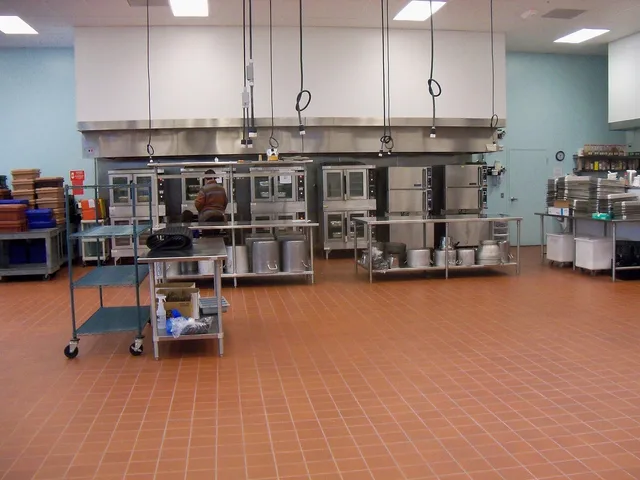
Once the product exists, where it is stored becomes an operational question rather than a study. Layout, temperature control, separation of raw and finished goods, and pest exclusion are design problems.
The USDA Agricultural Marketing Service (AMS) runs a wholesale market and facility design team that provides technical assistance on constructing or remodeling facilities, including incubator kitchens and food hubs, and it works through building codes, zoning and fire regulations. If you are fitting out a space rather than renting one, that is where the storage room and its temperature control get designed, and it is a source of help most small makers do not know exists.
For the consumer facing version of storage advice, see our specialty seasoning storage rules, and for where this study sits in the wider sequence, see our condiment product development process guide.