Industry
How to judge evidence in condiment case studies
For condiment brand case studies, separate records from recollection, account for survivorship bias, and state what one maker's story can—and cannot—prove.
What to take away
- Almost every published case study is about a business that survived. The ones that did not are where the lessons are. That gap is survivorship bias: if failed condiment makers are missing, readers can mistake a survivor's habits for the reason it succeeded.
- Separate what was observed from what was concluded. Most case studies blur the two.
- The strongest evidence in a case study is boringdates, documents, quantities and named sources.
- Write down the constraints the business worked inside, or the lesson will not transfer to your sauce, spice or condiment business.
What a case study can and cannot prove
A case study can show that something worked once, in a specific place, under specific constraints. It cannot show that the same choice caused the outcome, and it cannot show that it would work for you. That is not a reason to ignore case studies. It is a reason to read them for mechanisms rather than for recipes.
On this site, that matters because we cover independent sauces, spices and condiments in the United States. A case study about a hot sauce maker, a spice blender or a condiment producer can show how one batch, one retailer or one co-packer arrangement worked in one period. This article is a method for judging that evidence, not a case study of a particular maker.
It cannot prove that the same move would work for another small food business. Read those stories for the mechanism, not for a recipe to copy. When we publish profiles, we try to separate what a founder remembers from what a document can show.
The most common misreading is treating a survivor's habits as causes. A brand that used a particular packaging or channel and grew may have grown despite it.
The evidence hierarchy
| Evidence type | How much weight |
|---|---|
| Dated documents and contracts | High |
| Verifiable third party records | High |
| Numbers the business will let you publish | Medium |
| Founder recollection of events | Medium, with dates |
| Founder explanation of causes | Low |
| Press coverage repeating a press release | Very low |
Published collections are a reasonable starting point when you know what they are. The Small Business Administration publishes manufacturing success stories about small manufacturers it helped with financing, ownership transitions and expansion.
Evidence weight, high to low
Stronger evidence
- Documents
- Dated contracts
- Third parties
- Verifiable records
- Numbers
- Publishable figures
- Causes
- Not claimed
Weaker evidence
- Documents
- Press releases
- Third parties
- Founder memory
- Numbers
- Recalled figures
- Causes
- Founder explanation
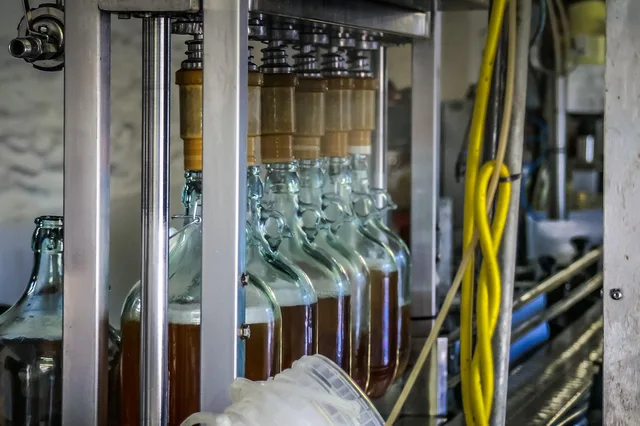
Those are selected examples of assisted businesses; they are useful for mechanisms and unsuitable as a sample. Inside a sauce, spice or condiment business, the same preference for boring evidence points at the machines, where a nameplate settles questions a founder's memory cannot.
Why good data on this is hard to get
Detailed retail information exists and is mostly not public. USDA describes its use of proprietary data within the Consumer Food Data System, drawing on sources such as scanner data and establishment time series data, and notes that access to these datasets is restricted.
That restriction shapes what anybody can honestly claim about a small brand's performance. Nobody writing publicly about an independent condiment brand has its sales data. Treat any article that implies otherwise with suspicion, including ours.
There is a second, quieter problem. Founders reconstruct their own history in the telling, not dishonestly but in the way everyone does, by arranging events into a story that makes sense in hindsight. Dated documents are the antidote.
When a recollection and an invoice disagree, the invoice is usually right, and the gap between them is often the most interesting thing in the study. The same gap appears on a jar, where the testable half of an origin story is a short list and the rest is atmosphere.
Writing one that holds up
Fix the scope first: one business, one period, one question. Record what you can verify, and mark clearly what is the founder's account. Write down the constraints, including money, location, family circumstances and luck. Then state what you did not learn.
A case study that ends with open questions is more useful than one ending with five lessons. The questions show readers where their situation might differ.
For the method behind finding businesses worth studying, see our watch list guide. For failure patterns that rarely appear in published stories, see the lessons from projects that went wrong.
Common questions
Should I trust a case study on a company website?
How many case studies make a pattern?
Can I write about a business without permission?
What is the most valuable case study?
In this guide
- Condiment brand case studies reviews: how to run themCondiment brand case studies reviews: buy the full range at retail, verify organic claims, read testimonials and separate what sold from what was good.
- Public records come first when a condiment brand case study beginsHow to run condiment brand case studies: set one question, confirm the legal facts from public records, agree what can be published, and build a dated timeline.
- Independent condiment brands compared with what actually happensIndependent condiment brands differ by channel, pack size and who does the work, so compare ratios and shelf-life dates instead of raw prices.