Industry
Part of How do you actually find indie sauce brands worth following on your own?
Four supplier types behind an independent sauce brand, and how to test them
The four supplier types independent sauce brands makers rely on: grower, packer, glass, label. How to find backups and what questions test each.
What to take away
- A brand is a set of relationships as much as a recipe. For independent sauce brands makers, growers, a packer, a bottle supplier and a printer all have to work.
- Single sourcing is the most common structural weakness in small food businesses.
- Certified inputs, such as organic ingredients, come with their own paperwork chain under the USDA National Organic Program.
- Ask a brand who its second supplier is. The answer tells you how durable the business is.
The four relationships behind a bottle
Every independent sauce brand depends on at least four outside parties. The grower or importer who supplies the main ingredient. The facility where it is made, whether that is a rented kitchen or a co-packer. The glass and closure supplier — O-I Glass is the dominant US container-glass maker, and Berlin Packaging distributes bottles and closures at scale. The label printer.
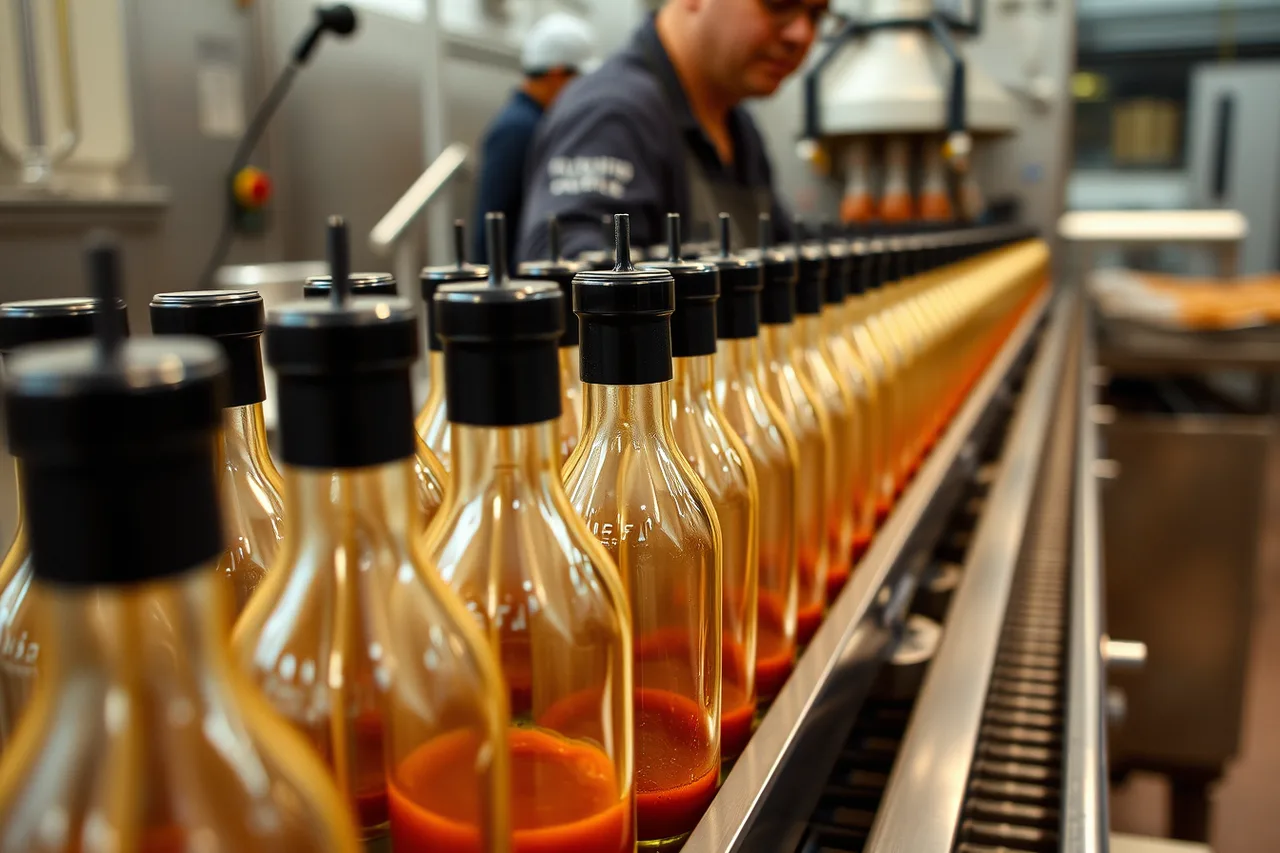
A failure at any one of them stops production, and three of the four have lead times measured in weeks. Glass is the relationship hardest to swap, because a bottle choice sets cost, case count and fill line compatibility at once.
That is why the durable brands look boring from the outside. They have named backups, they order early, and they hold a little more stock than seems necessary.
Finding domestic suppliers
NIST's Manufacturing Extension Partnership runs a supplier scouting service. It identifies United States manufacturers with specific production and technical capabilities and connects them to customers at national, regional, or local scale.
It notes small and medium sized manufacturers are particularly exposed to supply chain disruption. For a sauce brand seeking a second bottle supplier or a domestic packer, that is a route most founders have never heard of.
The practical version is a list. For each critical input, write down the current supplier, one alternative you have actually spoken to, and the lead time for each. Update it once a year.
When the inputs are certified
Certified inputs bring their own chain of documents. The USDA National Organic Program (7 CFR Part 205) sets the rules for any organic claim, and an accredited certifier must inspect and verify the operation annually. The National Agricultural Library's page on organic production gathers research guides and extension material, but the governing authority and the forms an organic label requires come from the NOP.
If your brand carries an organic claim, every ingredient must be traceable through a certified chain. The paperwork is part of the product.
The same principle applies to any audited claim. The claim is only as strong as the weakest supplier record behind it.
Questions that test each supplier relationship
| Question | What a good answer sounds like |
|---|---|
| Where is it made | A named facility and state |
| Who grows the main ingredient | A region or a named grower |
| What is your second supplier | A specific name, already contacted |
| How far ahead do you order packaging | A number of weeks, not a shrug |
| What happens in a bad season | A written plan, even a short one |
The last two questions separate businesses from projects: a brand that has planned for a bad season knows what to do when its main ingredient doubles in price or fails to arrive.
The options: reformulate within an approved process, shrink the run, raise the price, or skip a year. Each option is survivable, but having no answer is not.
None of these are trade secrets. A founder who cannot answer them is running on optimism, which works until it does not. Buyers ask a shorter version of the same list, and the questions worth putting to a seller before an order are the ones with equally short answers.
The equivalent picture for dry blends is in our spice blending walkthrough, and the criteria for deciding which brands are worth this level of attention are in the watch list guide.