Reviews
Part of A Method for Commercial Sauce Equipment Reviews
Commercial Sauce Equipment Tasting: A Comparison Protocol
Commercial sauce equipment tasting protocol for makers: control variables, calibrate instruments, score batches blind, and check process requirements.
What to take away
- For a commercial sauce equipment tasting, change one thing. If the kettle and the supplier change in the same month, you will never know which moved the flavor.
- Run the old and new equipment side by side on the same day with the same ingredient lots.
- A kettle, mill or filler can shift sauce color, texture, aroma, particle size, fill weight, or yield; score the attributes in your product specification rather than assuming flavor is the first signal.
- Check the instruments before you trust the comparison, because a new machine often comes with new sensors.
The single variable rule
For a hot sauce, condiment, or seasoning paste, an equipment change is a natural experiment, and any other change made at the same time ruins it. Freeze ingredient lots, formula, batch size, and staff for the comparison. Buy enough of every input beforehand so the trial and control run on identical material.
Freeze These Before the Trial
- Ingredient lots
- Formula
- Batch size
- Staff
- Cleaning system
Rule out the cleaning system as well, since a trace left in a hose or a gasket will read on the score card as something the new machine did.
Ingredient supply shifts under you more than people realize. Sugar is one example. USDA reports that since the mid-2000s sugarcane has accounted for 40 to 45 percent of domestic sugar production and sugarbeet for 55 to 60 percent.
Its background on sugar and sweeteners also describes long-term increases in production and yields. A distributor switching source between two deliveries is normal. It will show up in your tasting as if the machine caused it.
Trust the instruments before the palate
A new machine usually arrives with new sensors, and a temperature reading from the new kettle is not automatically comparable with the old one. Verify both against a calibrated reference thermometer with a calibration certificate traceable to NIST. Check them at the operating temperatures relevant to the sauce, use the allowable error in your process specification, and set the verification interval in your written quality plan.
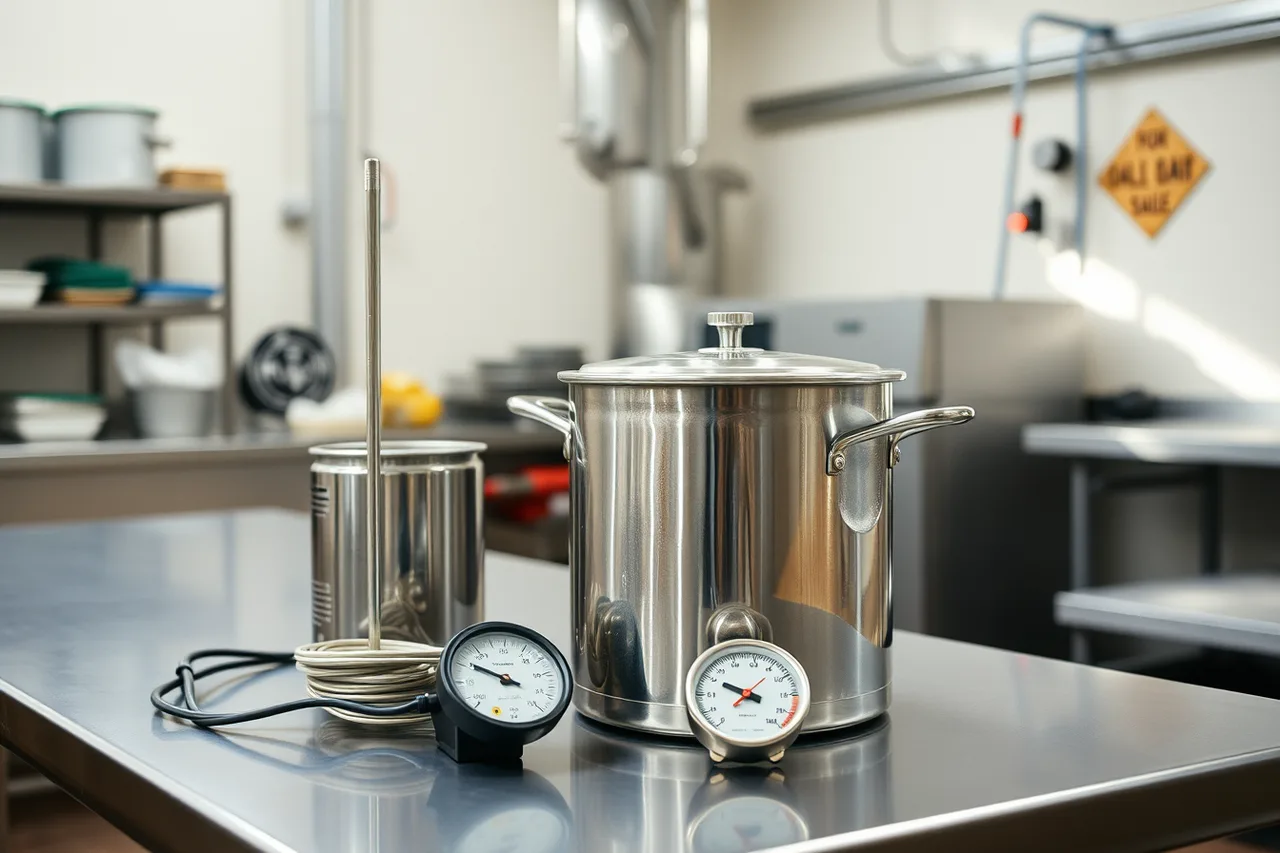
NIST's session on calibration certificate evaluation covers how to evaluate certificates from service providers, common nonconformities in reporting measurement results including unit and symbol errors, and the corrective actions that follow. The practical version is to read the certificate that came with the machine rather than filing it, and to check that it actually covers the range you work in.
What to score
| Attribute | What an equipment change usually does |
|---|---|
| Color | Changes with heating rate and time at temperature |
| Texture and body | Changes with shear from pumps and mills |
| Particle size | Changes with mill type and screen |
| Aroma | Changes with evaporation during the cook |
| Fill weight consistency | Changes with the filler, not the recipe |
Score texture and color first. For each sensory attribute, use a target-anchored scale: below target, meets target, or above target, with the target taken from the sauce's written product specification. Record fill weight and yield as measurements, not sensory impressions, and do not create acceptance limits after tasting.
Use the triangle test for sensory discrimination: serve each taster three coded portions, two from one machine's batch and one from the other's, and ask which portion is the odd one. Keep tasters blind to machine identity, randomize which machine supplies the odd sample and the serving order for each taster, and serve portions at the same temperature and size. The test indicates whether the batches are distinguishable, not which one is better.
If your team is small enough that everyone knows, bring in two people from outside the production room for the session. The cost is an hour of someone's time, and it can reduce production-room cues, but keep those tasters blind to which machine made each sample.
Running the comparison
Make the same product on both machines on the same day. Use at least three tasters, scoring independently, and include a blind repeat of the triangle test; change the codes so the repeat is not obvious. At least three tasters is a small internal screen, not a universal minimum for a defensible sensory conclusion, so determine panel size in advance based on the sensitivity you need. Evaluate the first responses with a binomial test against chance performance, using a significance criterion chosen before the session. A detectable difference is not automatically a failure: accept the new equipment only if sensory scores remain within the product's existing specifications and its process requirements are approved.
That duplicate is the control a development panel uses too. If the preset repeat check fails, discard the whole session and repeat it; do not exclude one inconsistent taster and analyze the rest. Record fill weights and yields alongside the sensory scores, since a yield change often explains a texture change.
Then hold the decision for a week and taste again. Some equipment effects, particularly those involving emulsion stability, only appear after the product has sat. The panel method is set out in our batch tasting guide, and the criteria for choosing the machine in the first place are in the equipment review guide.