Reviews
Part of A hot sauce production budget in three blocks, worked through
Hot sauce equipment in buying order: what to check first
Hot sauce production equipment in buying order and what to check: NIST scale classes, kettles, fillers, the FDA process filing, bottles and chillies.
This review takes the equipment and inputs of small-batch hot sauce production in the order a maker should buy them, and says what to check before each purchase. It deals in suitability, accuracy and supply risk rather than prices, which depend on the supplier and the year.
What to take away
- Buy accuracy before you buy capacity. A wrong scale invalidates every batch record it touches.
- The kettle is the item most often bought too large, and the filler is the item most often bought too late.
- Bottles look like a small decision and set your cost per unit for years.
- Chilli is the input that moves most, so track its market rather than assuming last year's price.
Scales come first
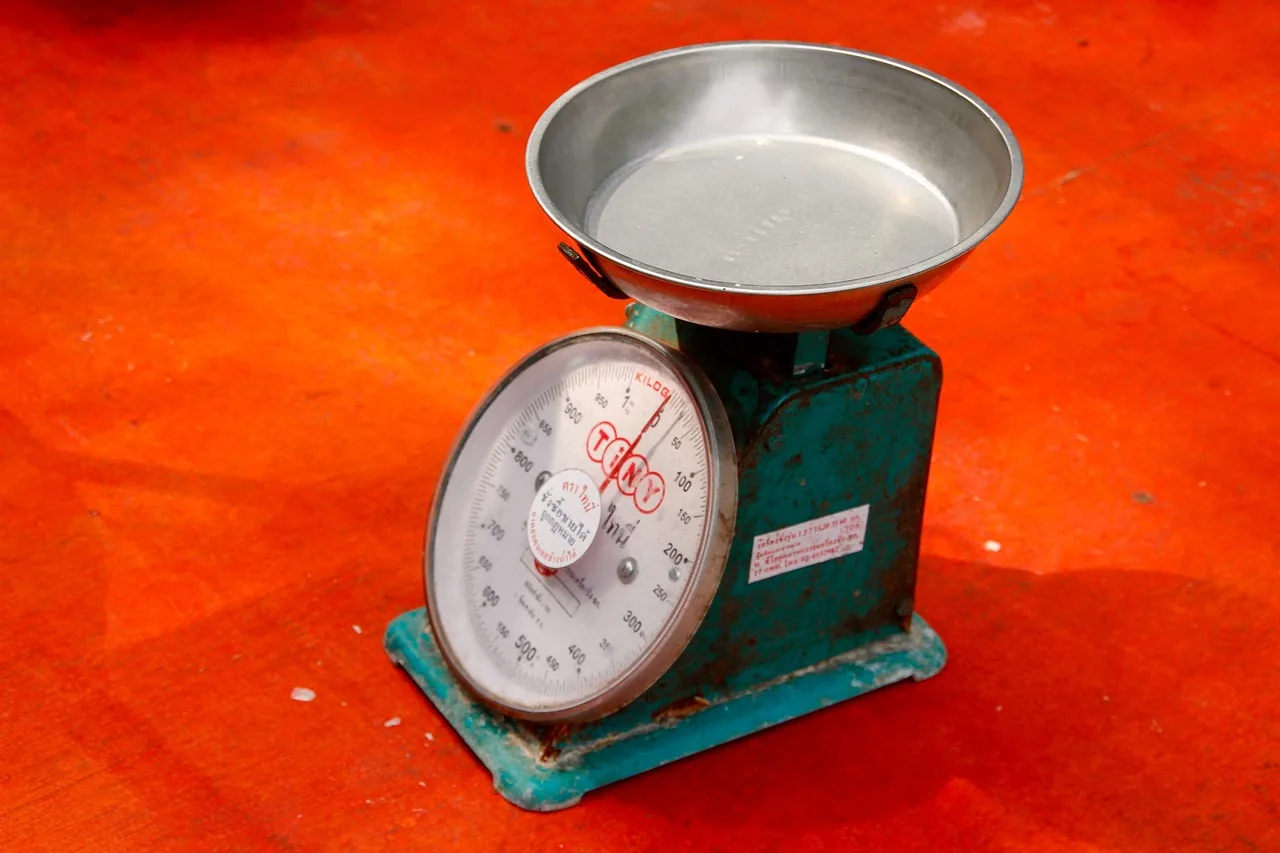
Every batch record, every yield check and every label declaration rests on weighing. A scale that is unsuitable for the load, the environment or the accuracy you need turns careful work into fiction.
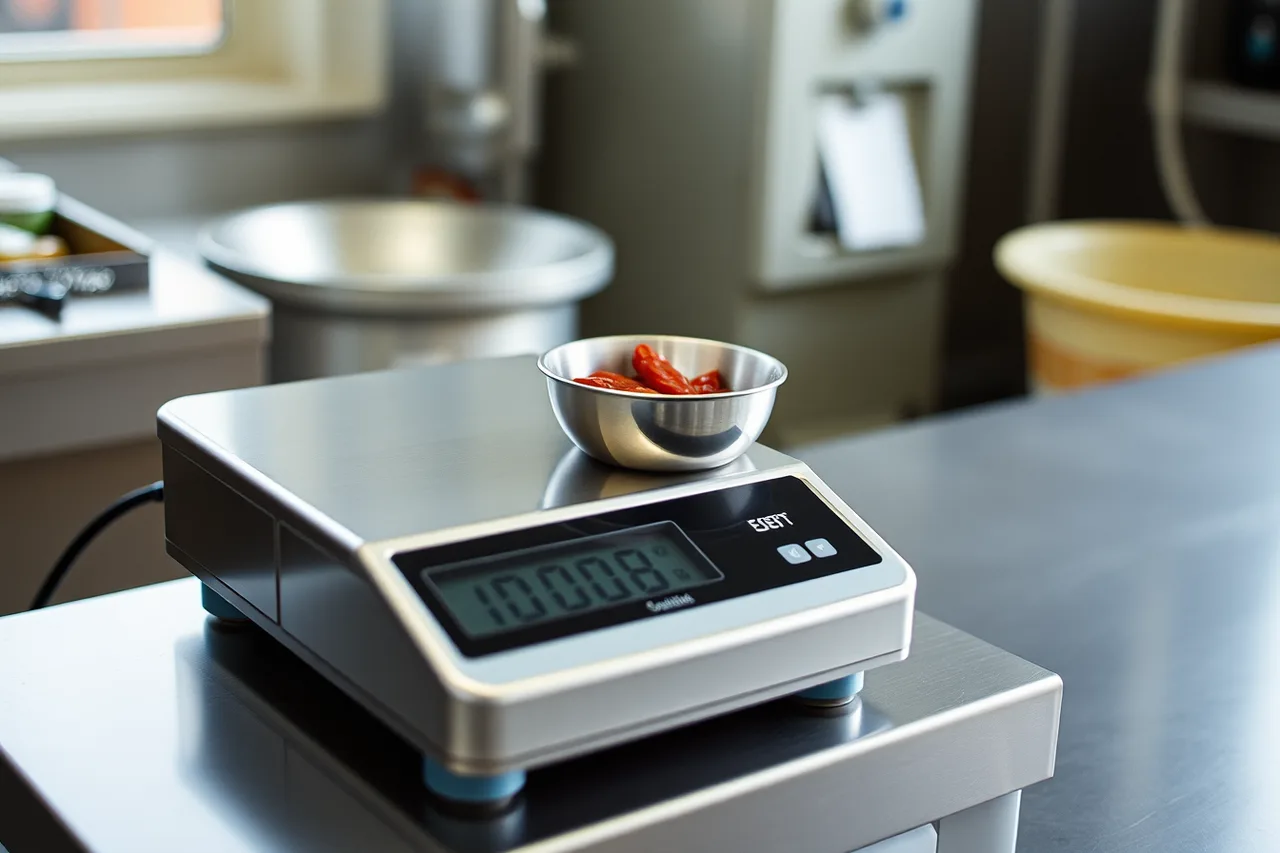
NIST's weighing and scales questions and answers explain how to choose one that suits the product being weighed. Match the accuracy class to the application, keep expected maximum load within capacity, and make minimum load exceed the device's recommended minimum. The typical class for each weighing application is in Table 7a of NIST Handbook 44, section 2.20, and the recommended minimum load in its Table 8. The minimum load then sets the verification scale interval, e: if a class III scale will weigh loads of 0.25 lb or more, e should be no greater than 0.01 lb, and if a class II scale will weigh no less than 100 g, e should be no greater than 2 g. For a formulation scale that weighs small additions of acid, salt or spice, that second case is the one to check.
Those four checks beat any product review, and the same document says NIST Handbook 44 requirements apply commercially.
Buy one accurate scale for formulation. If you sell by weight, make sure the device used in trade is one your state weights and measures authority will accept. NIST keeps a list of state weights and measures directors; in Texas, for example, the office it lists is the Texas Department of Agriculture.
The rest of the equipment, in the order to buy it
- Thermometers with a documented check against a reference. Cheap, and the most consequential item on this list.
- A kettle sized to your realistic batch, not your ambition. An oversized kettle heats unevenly at low fill and wastes energy. Decide between a direct-fired kettle and a steam-jacketed one on how evenly you need to heat a thick mash, not on price alone.
- pH measurement equipment where your process requires it, used according to your process documentation rather than a general recipe. For most hot sauces this is not optional: FDA defines an acidified food as a low-acid food to which acid or acid foods are added and which has a finished equilibrium pH of 4.6 or below and a water activity greater than 0.85, and a commercial processor of acidified foods must process each food in conformity with the scheduled processes it has filed under 21 CFR 108.25. The FDA process filing for acidified foods is made on Form FDA 2541e, one scheduled process for each acidified food in each container size, so changing bottle size means a new filing before the meter's readings count for anything.
- A filler, once hand filling becomes the bottleneck on sales rather than on pride. Piston fillers suit thick or particulate sauces; gravity and overflow fillers suit thin, pourable ones, and overflow filling gives the level fill line a retail shelf expects.
- A capper with torque control, because seal failures show up weeks later at a customer.
- Basic sanitation equipment, including dedicated brushes for valves and hoses.
Bottles and closures
A bottle choice is a long commitment. It sets your per unit cost, your case count, your freight weight, your fill line compatibility and your shelf presence. Standard shapes are cheaper, available from more suppliers, and easier to replace when one supplier fails. Custom molds are the opposite in every respect.
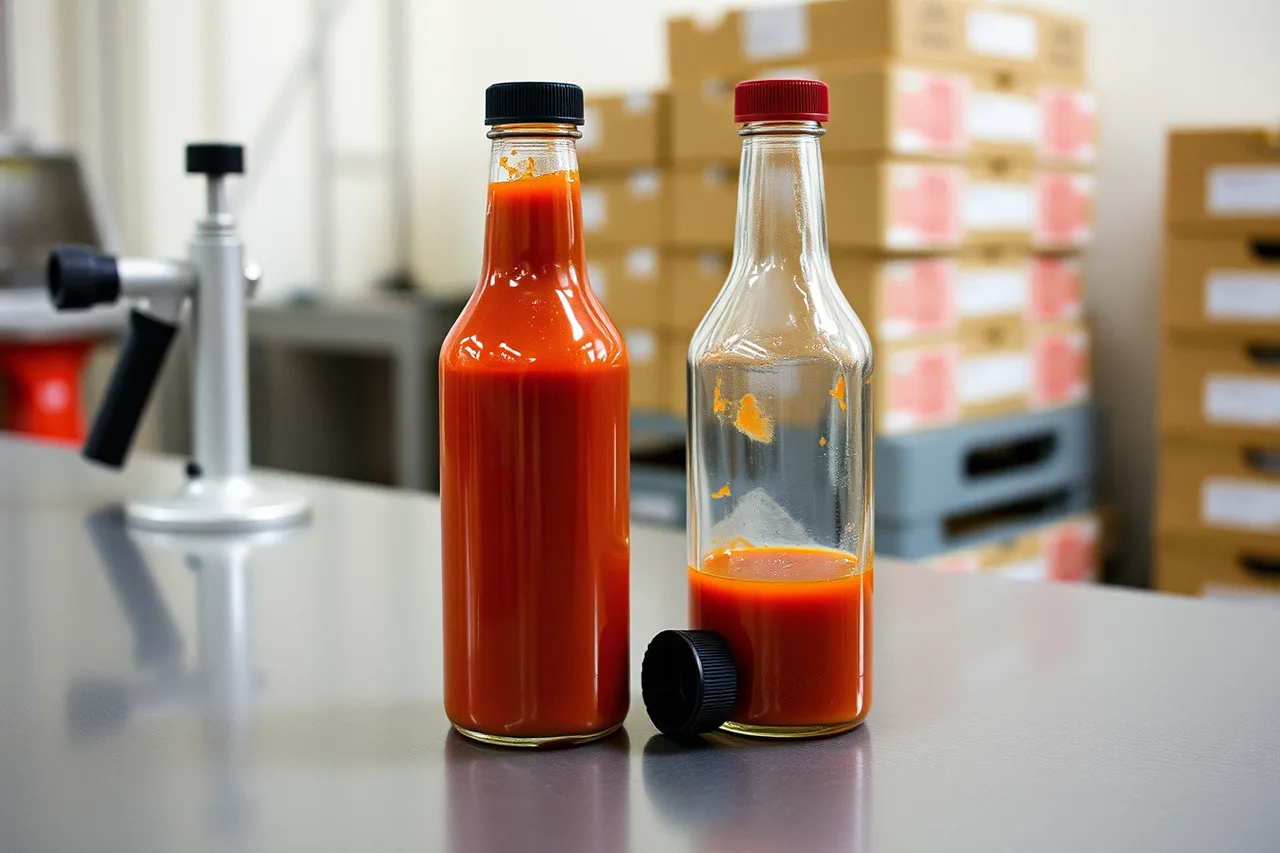
Case count and freight weight become somebody else's problem next. A heavy bottle shows up as a thinner margin in the landed cost a shop works out before it sets a shelf price.
Closures are part of the same decision and are often treated as an afterthought. A cap has to fit the finish, tolerate the fill temperature your process specifies, and hold a seal through transport. Changing a cap supplier is not a like for like swap. Seal failures found by customers cost far more than the saving.
Because the FDA process filing is made per container size, a new bottle size is also new paperwork. Ask three questions before ordering. What is the lead time in the worst month of the year? What is the minimum order? Who else stocks this exact bottle if my supplier cannot deliver?
Chillies, and knowing what you should be paying
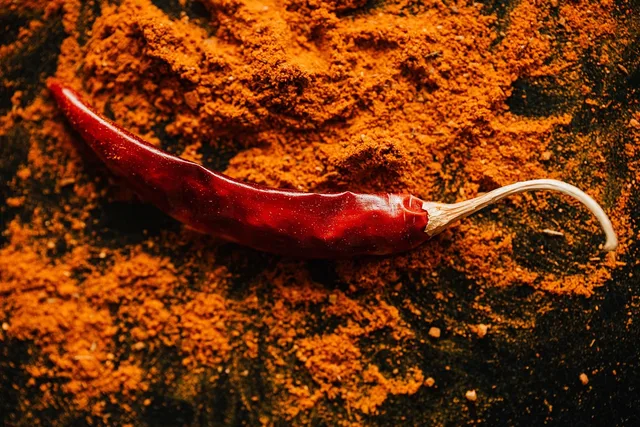
Chilli is the input most likely to move sharply, and the one most likely to be bought on a handshake. AMS Specialty Crops Market News publishes price, volume, quality and condition data for hundreds of commodities at major wholesale markets, shipping points and terminal markets, with downloadable reports including organic data.
That data will not price your specific grower agreement. It will tell you whether a quoted number sits inside the market or outside it.
Treat that movement as a planning constraint, not an occasional surprise. Usually the changes that reach a four hundred jar run arrive as a quote or lead time before anyone writes about them.
For how these purchases fit into a whole budget, see the cost structure guide. For what a run day looks like once the equipment is in place, see the production walkthrough.