Industry
Part of A hot sauce production budget in three blocks, worked through
Which hot sauce operations are worth studying before you cost your own line?
How to find comparable hot sauce operations and learn from their numbers, described by operating type rather than by names we cannot independently verify.
What to take away
- Study the hot sauce operations that share your constraints, not brands you admire. Scale is the constraint that matters.
- Five operating types cover almost every independent hot sauce business, and each has a different cost shape. Real operations to check by name: Secret Aardvark, Huy Fong Foods, Yellowbird, Nando's and Marie Sharp's.
- Public advisers see real numbers from comparable businesses and will talk to you for free.
- Labels, ownership and shelf prices are public. Private cost structures are not, so treat any per-unit figure you cannot trace to a filing or an adviser as a guess.
Five operating types worth studying, with a real operation for each
Five operating types worth studying
Cost shape
- Market only maker: Secret Aardvark, Portland, Oregon
- Low fixed cost, high labor per unit
- Rented kitchen brand: Huy Fong Foods, Los Angeles, in its early years
- Per hour facility cost, hand filling
- Co-packed regional brand: Yellowbird, Austin, Texas
- High minimums, low unit cost
- Restaurant spin off: Nando's PERi-PERi, Johannesburg
- Shared overhead, built in demand
- Farm attached maker: Marie Sharp's, Dangriga, Belize
- Owns the input, exposed to weather
What to learn from it
- Market only maker: Secret Aardvark, Portland, Oregon
- How far a business goes without wholesale
- Rented kitchen brand: Huy Fong Foods, Los Angeles, in its early years
- Where labor stops scaling
- Co-packed regional brand: Yellowbird, Austin, Texas
- The volume where co-packing wins
- Restaurant spin off: Nando's PERi-PERi, Johannesburg
- How an existing customer base changes risk
- Farm attached maker: Marie Sharp's, Dangriga, Belize
- What vertical integration really costs
Secret Aardvark started at Portland farmers markets in 2004 and now runs its own production space in the city. Huy Fong began in 1980 in a small Los Angeles kitchen, delivered bottles by van, and later moved sriracha production to a plant in Irwindale, California.
Yellowbird moved from Austin farmers markets into co-packing and then into national grocery. Nando's opened its first restaurant in Johannesburg in 1987 and now sells bottled PERi-PERi sauce in supermarkets. Marie Sharp's, in Dangriga, Belize, has grown its own habaneros since 1981.
Pick the type nearest your own situation and study two examples of it. Studying a national brand teaches you about a business that solved different problems.
Five hot sauce operating types
Market only
- Cost shape
- Low fixed, high labor
- What to learn
- How far without wholesale
Rented kitchen
- Cost shape
- Per hour facility
- What to learn
- Where labor stops scaling
Co-packed regional
- Cost shape
- High minimums, low unit
- What to learn
- Volume where co-packing wins
Restaurant spin off
- Cost shape
- Shared overhead
- What to learn
- How existing demand cuts risk
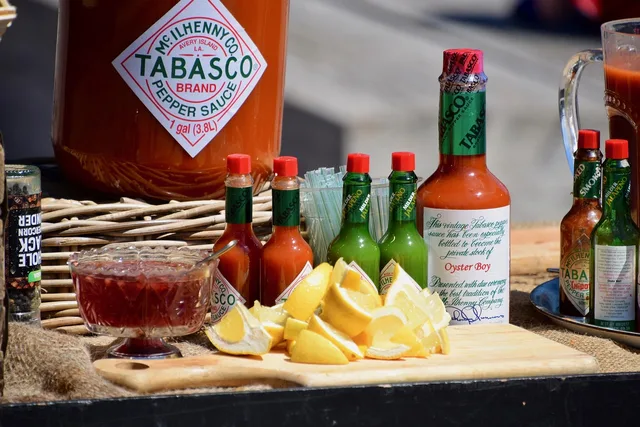
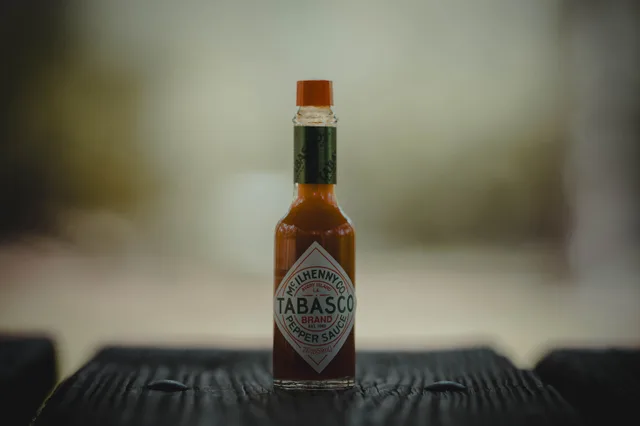
Scale separates these operations more than recipe does. McIlhenny has made Tabasco on Avery Island, Louisiana since 1868 and ages pepper mash in white oak barrels, some for three years. Tapatío has been bottled in Vernon, California since 1971, and a 5-ounce bottle typically sells for $3 to $5.
What to look for when you study one
Read the label first: it names the packer, state, bottle size, and certifications, which imply the production route. Then check where the product sells, because distribution breadth implies volume, and volume implies cost shape.
What to look for when studying
- Read the labelpacker, state, bottle size, certifications
- Check where the product sells
- Watch the rangeproducts vs sizes
- Ask minimum run and lead time
- Ask how they handle a bad chilli season
- Ask what broke first when they grew
Huy Fong bought red jalapeños from Underwood Ranches in Ventura County, California for years, and the contract ended in a dispute in 2017. Underwood now bottles its own sriracha. Shortages in 2023 and 2024 pushed Huy Fong to allocate supply, which is a lesson about single sourcing.
Volume changes every input decision and every cost, and the way chilli form and acid choice shift between price tiers shows that clearly.
Watch the range too. A maker with one product and four sizes is running a different business from a maker with twelve products in one size, even at identical revenue. The first is optimizing for distribution and the second for a farmers market table, and their cost problems barely overlap.
Ask about the boring parts. Minimum run, lead time, how they handle a bad chili season, what broke first when they grew. Makers are usually generous with this information because none of it is a competitive secret.
Where to find comparable numbers
Small manufacturers are not evenly distributed, and food processing has long been significant in rural manufacturing. USDA research on rural business and industry describes rural economies that specialize in resource based activities.
Manufacturing, including food processing, is key to many of them. That frame helps you judge which region's cost structure resembles yours.
For actual numbers, use the free advisory network. The Small Business Administration's local assistance directory connects businesses with resource partners and counselors, including export and trade help. Those advisers have seen the books of businesses like yours, which is the comparison a website cannot give you.
Public prices give you a rough ladder. Cholula, bought by McCormick in 2020 for about $800 million, typically sells at $5 to $7 for 5 ounces. Valentina, made in Mexico, typically goes for $2 to $4 for 12.5 ounces.
TRUFF asks about $18 for 6 ounces, which shows how far packaging and a story can push a co-packed brand. Frank's RedHot, which came to McCormick in a $4.2 billion deal in 2017, was the sauce in the original 1964 Buffalo wing.
Turning a study into your own model
Write down what you learned as three numbers: their approximate run size, their approximate cost per unit, and the constraint that limits them. Then check your own model against those.
Compare against a price on a shelf. If a 5-ounce bottle retails at $5, the maker's wholesale price is typically closer to $2.50, and ingredients, bottle, label, labor and freight come out of that.
If you do not have a model yet, the first four weeks of building one start from a batch you measured yourself rather than from anyone else's numbers.
If your projected cost per unit is far below a comparable operation's, you have left something out, and the usual omissions are labor, freight and compliance.
The cost structure guide has the framework, and the notes on checking a maker's origin claims are useful when a business you are studying describes itself in ways the label does not support.