
Costs
A hot sauce production budget in three blocks, worked through
A hot sauce production budget in three blocks: what is fixed, what moves with volume, a worked break-even at three run sizes and the process authority step.
What to take away
- Build the budget in three blocksone time costs, per run costs, and per unit costs. Mixing them is how makers price badly.
- Packaging and the co-packer minimum usually dominate the per unit number at small volumes.
- Ingredient prices move. Build a plan that survives a bad season rather than one that assumes an average one.
- Publish no price until you have run the numbers at three volumes and know your break even at each.
The three blocks
One time costs happen before the first sale and never again in the same form. Recipe development, the process review that establishes a safe process for a shelf stable acidified sauce, label design, artwork plates, business registration and initial insurance all sit here. They are easy to underestimate because none of them feel like manufacturing.
Three Cost Blocks
One time
- When
- Before first sale
- Examples
- Process review, artwork
- Volume
- Never repeats
- Risk
- Easy to underestimate
Per run
- When
- Every line start
- Examples
- Facility, sanitation, labor
- Volume
- Fixed per batch
- Risk
- Hurts small runs
Per unit
- When
- With each jar
- Examples
- Chillies, glass, label
- Volume
- Scales cleanly
- Risk
- Planned first
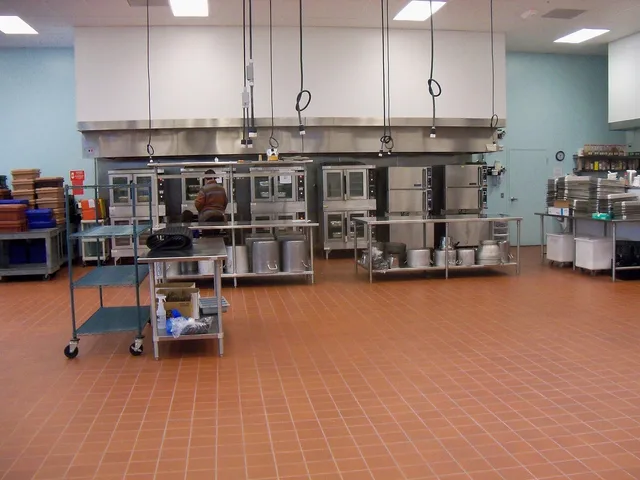
Per run costs happen every time the line starts. Facility rental or co-packer setup, sanitation, quality checks, and production-day labor belong here. They do not shrink when you make fewer jars, so small runs cost more per unit.
That block also holds the cheapest experiments, since booking off peak facility time or trading production hours with another maker moves the one cost a small run cannot spread.
Per unit costs are ingredients, glass, closure, label, carton and freight. These are the only ones that scale cleanly, and they are usually the ones people plan first.
Where the money actually goes
| Block | Typical contents | Behavior |
|---|---|---|
| One time | Process review, artwork, registration, insurance setup | Sunk before revenue |
| Per run | Facility, setup, sanitation, quality checks, labor | Fixed per batch |
| Per unit | Chillies, vinegar, salt, glass, cap, label, carton | Scales with volume |
| Ongoing | Insurance renewal, storage, accounting, compliance | Monthly regardless of sales |
At a few hundred jars, the per run block frequently costs more than the ingredients. That single fact explains most of the price gap between a small maker's bottle and a national brand's.
Cost Blocks At A Glance
Block
- One time
- Process review, artwork
- Per run
- Facility, sanitation, labor
- Per unit
- Chillies, glass, cap
- Ongoing
- Insurance, storage, accounting
Typical contents
- One time
- Sunk before revenue
- Per run
- Fixed per batch
- Per unit
- Scales with volume
- Ongoing
- Monthly regardless of sales
Behavior
- One time
- Per run
- Per unit
- Ongoing
A shop adds a layer on top because it prices from landed cost rather than from your invoice. Freight you never paid still lands on your product.
Planning inside a moving market
Ingredient and packaging prices do not hold still. USDA's food price outlook summary publishes monthly forecasts built on Consumer Price Index and Producer Price Index data across food categories.
Reading it teaches two useful habits: track category level movement instead of one headline number, and tell retail prices apart from producer prices. The producer index is closer to what you will pay for inputs.
For the business scaffolding around the numbers, the Small Business Administration's plan your business section covers market research, business plan templates, a startup cost calculator and funding routes. Working through the startup cost exercise before choosing a bottle size is a better sequence than the reverse.
The safety line that cannot be cut
A shelf stable hot sauce is a regulated product, and a qualified process authority must establish and document the safe process for your specific formula and container. That review is a real cost line, not a formality, and a time line too. Kansas State University Research and Extension notes that once a process authority has everything it needs, it may take 4 to 6 weeks to return a scheduled process, that two flavors of a similar product can need two separate scheduled processes, and that any change to the formula, packaging materials or package size means consulting the process authority again. The authority also helps complete the FDA process filing for an acidified food, Form FDA 2541e. To find one, the same fact sheet points to the Association of Food and Drug Officials (AFDO) directory of approved process authorities, listed by state.
Chili in oil, thick purees, and low-acid vegetable bases are formulas where guessing causes harm. If a budget only balances when this line is removed, the budget is wrong.
Sanity checking your number
Run the model at three volumes and compare. If your price only works at the top volume, you are planning on demand you have not yet proven.
A worked example, with round illustrative numbers rather than quotes, in whatever currency you buy in. One time costs come to 4,000. Each run costs 900 in facility time, setup, sanitation and labor. Each jar costs 2.40 in sauce, glass, cap, label, carton and freight. The wholesale price is 6.00, so every jar contributes 3.60 before the run cost is paid.
- At 300 jars a run, the run cost adds 3.00 a jar, so a jar costs 5.40 and the run earns 180. Recovering the 4,000 takes 23 runs.
- At 600 jars, the run cost adds 1.50, a jar costs 3.90 and the run earns 1,260. The 4,000 is back after 4 runs.
- At 1,200 jars, the run cost adds 0.75, a jar costs 3.15 and the run earns 3,420. Two runs cover the one time block.
The break-even run is 900 ÷ 3.60 = 250 jars: below that, every run loses money however good the sauce is. Swap in your own quotes and the shape stays the same, which is why the per run block decides the price at small volumes. The starting sequence walks through the first decisions in order, and the price tier breakdown shows what customers actually receive as the shelf price rises.
Common questions
What is the biggest hidden cost?
Should I buy equipment or use a co-packer?
How do I handle a chilli price spike?
When can I lower the price?
In this guide
- Hot sauce equipment in buying order: what to check firstHot sauce production equipment in buying order and what to check: NIST scale classes, kettles, fillers, the FDA process filing, bottles and chillies.
- Five quotes to collect before costing hot sauce productionWhat to ask five suppliers before you cost a hot sauce line, why each quote needs three volumes, and how to line the answers up on one sheet.
- Which hot sauce operations are worth studying before you cost your own line?How to find comparable hot sauce operations and learn from their numbers, described by operating type rather than by names we cannot independently verify.
- 4 details of independent hot sauce brands people missWhat separates a cheap hot sauce from an expensive one: chilli form, acid choice, thickeners, run size and packaging, plus how to compare bottles honestly.
- A retailer checklist for stocking hot sauce: terms, compliance and shelf salesA retail checklist for stocking hot sauce: how to build landed cost, choose a supply route, check a maker's FDA filings and terms, and judge weekly sales.