Guides
Small batch sauce production planning: five steps, in order
Small batch sauce production planning in order: pick your legal route, get a process authority letter, register, cost the run, then make the first batch.
Small batch sauce production planning is a sequence, not a checklist: settle the legal route first, then have a process authority establish the process for your formula, then the business paperwork, then the cost of the run, and only then the first batch.
What to take away
- Settle the legal route before you buy anything. Cottage food, licensed kitchen and co-packer lead to different products.
- A shelf stable acidified sauce needs a process established by a qualified process authority. That step is not optional and not something to guess.
- Cost the packaging and the minimum run before the recipe. Those two numbers set your price, not your ingredients.
- Build the record keeping habit on day one. Lot codes cost nothing at the start and are impossible to reconstruct later.
Step one: decide which door you are walking through
There are three routes to a legal first case, and they impose different limits.
Which legal route applies
Where will you sell and how much?
Cottage food: state limits, acidified often excluded
Rented licensed kitchen: inspected, wider range, hourly cost
Cottage food laws are state statutes, and which one applies depends on where you live. They are administered by the state department of agriculture or the state health department, and the state's food program page is where the rules for your product are actually written down. Search your state's name with the words cottage food law and read the statute before you order labels. Some states limit sales to low-risk, shelf-stable items, some cap annual sales, and some allow acidified products such as pickles and salsa. Only your own state's law tells you which applies.
Step two: get the process established
A sauce left unrefrigerated is safe because of what was done to it, not what is in it. In FDA terms, most shelf-stable sauces fall into one of two regulated categories: acidified foods, covered by 21 CFR 114, or low-acid canned foods, covered by 21 CFR 113. Both carry registration and process filing duties under 21 CFR 108. The dividing line is pH 4.6 and water activity 0.85: at or below pH 4.6 the product is acidified, while a low-acid product above pH 4.6 and above 0.85 water activity needs a scheduled thermal process to be commercially sterile.
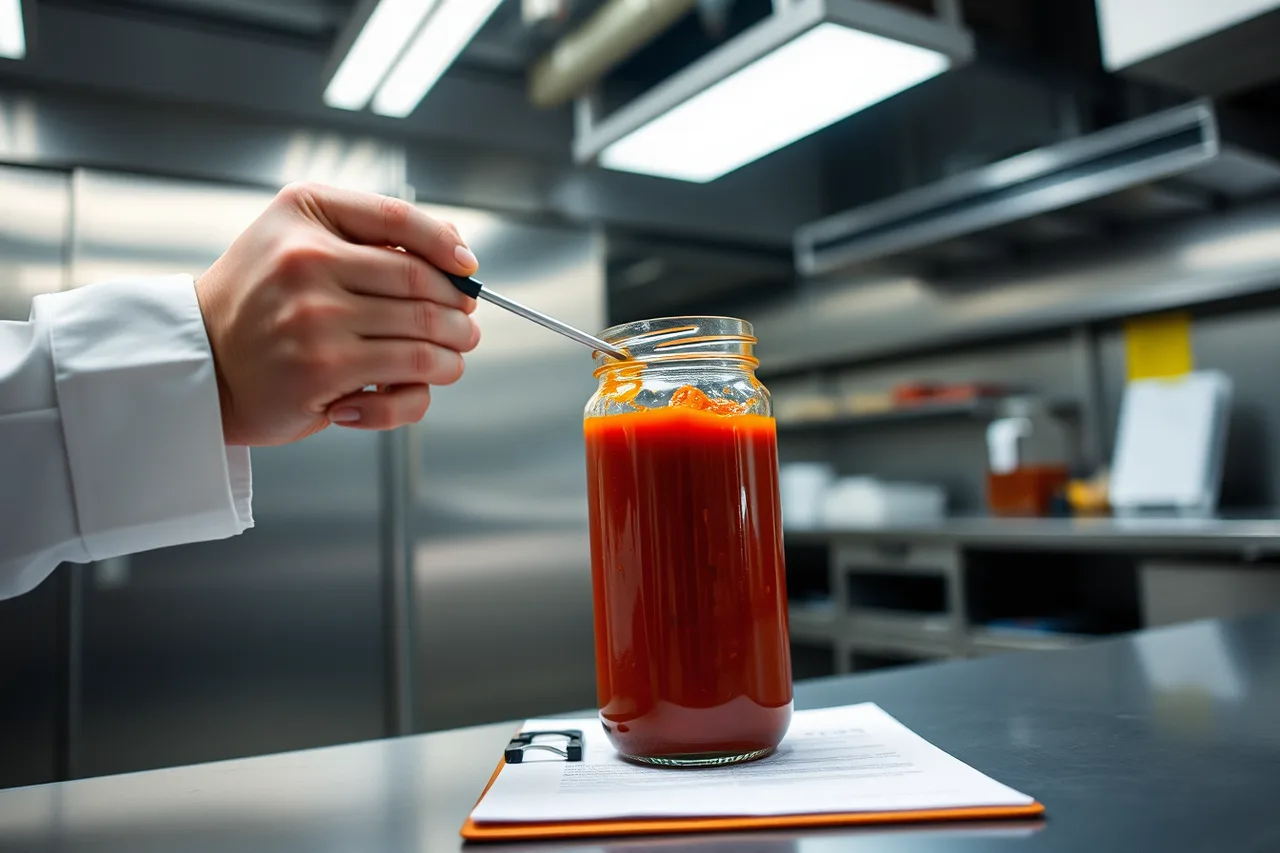
A qualified process authority reviews your recipe, your equipment, and your container, then establishes and documents the safe process for that formula. This matters most for garlic and chili held in oil, thick purees that heat unevenly, and any low acid vegetable base.
Do not take a number from a recipe site. The National Agricultural Library's collection on food safety standards is a reasonable place to understand the research and the regulatory framework, but the operative document for your product is the process letter written for your product. Process authorities are usually university food science extension programs, such as the Cornell Food Venture Center, or private laboratories that file processes with FDA, and your state's food program can point you to one. The person supervising the process must also have completed an FDA-approved course, in practice a Better Process Control School, as 21 CFR 114.10 requires.
Step three: the business scaffolding
Registration, tax identification, licenses and insurance sit between a recipe and a sale.
Small Business Administration's launch your business sequence covers picking a location, choosing a structure, registering, and obtaining federal and state tax identification numbers. Apply for licenses and permits and get insurance, then work in that order.
Location matters more than expected, because zoning, license fees and insurance rates change with it.
Once the sauce is a packaged food, the jar has to carry what FDA's labeling rules in 21 CFR 101 require: the statement of identity, the net quantity of contents, an ingredient list in descending order by weight, an allergen statement naming any of the major allergens present, a Nutrition Facts panel, and the name and address of the responsible party. A lot code is not decoration either, because it is what lets a jar be traced back to the batch it came from.
Step four: cost the run, not the recipe
Cost the run, not the recipe
| Cost line | Why it moves the price |
|---|---|
| Glass, closures, labels | Often the largest per unit cost at small volumes |
| Minimum run | Fixed setup spread across too few units |
| Process review | One time, but must happen before the first sale |
| Freight and cases | Heavy product, easily underestimated |
| Insurance | Usually required before any retailer will talk |
Run the numbers at three volumes, using real quotes rather than estimates: a case price for jars, closures and labels from your suppliers, the co-packer's minimum run and setup charge, and freight in both directions. If the price only works at the highest volume, you have a plan that depends on demand you do not yet have. Equipment is missing from that table on purpose, since it is bought once and used across years, and judging which purchases earn their cost is a separate exercise from costing a run.
Cost lines that move price
- Glass, closures, labelslargest per unit at small volumes
- Minimum runfixed setup spread across few units
- Process reviewone time before first sale
- Freight and casesheavy product, easily underestimated
- Insurancerequired before any retailer will talk
Step five: the first run and what to keep
Number every batch, keep a retained jar from each, and write down the actual weights used rather than the intended ones. Keep the batch sheet, the pH readings and the process letter together under the lot number, so any jar can be traced back to the day it was made. If you want production ideas that fit a first year budget, our list of approaches worth testing is a good next read, and the production day walkthrough shows what the work looks like in practice.
Common questions
Can I start in my home kitchen?
What is a process authority?
How many jars is a sensible first run?
Do I need a food safety plan?
In this guide
- Why small batch sauce production trends are hard to measureSmall batch sauce production trends are hard to measure with broad data. Track ingredient, packaging, co-packer, and buyer signals instead.
- Nine small batch sauce moves worth trying, from single-ingredient runs to byproduct rescueNine practical moves for a small sauce line, from seasonal single ingredient runs to shared kitchen scheduling, grant funded projects and byproduct rescue.
- One production-tasting checklist that catches sauce drift before customers doSetting up production tasting that catches drift: retained reference jars, blind triangle tests, a fixed vocabulary and records that survive staff turnover.
- Buying small batch sauce: lot codes, seals and net quantity to check firstA buyer's read on a small batch jar: lot codes, the responsible party, net quantity, the organic seal, and which questions separate real answers from copy.
- When does a small batch sauce production day actually start, and what happens first?What a small sauce production day actually looks like, from pre run checks and sanitation through filling, coding and the records that close the batch out.