Costs
Part of What does artisan actually mean on a condiment jar, and which claims can you verify?
How to compare artisan condiment jars by unit price and per serving
How to compare artisan condiments: unit price from the net quantity, cost per serving, what each price tier buys and where the money goes before the sauce.
What to take away
- Price mostly tracks run size, packaging and ingredient form. Flavor quality is only loosely attached to it.
- The jump from supermarket tier to specialty tier buys different ingredients. The jump above that usually buys smaller runs.
- Compare by unit price, not by jar price, and check the net quantity statement rather than eyeballing the bottle.
- A price that seems impossibly low usually means a cheaper acid, a cheaper thickener, or a much larger run.
Where the money goes before the sauce does
Raw ingredients are rarely the biggest cost in a small condiment business. Glass, closures, labels, cartons, freight, insurance, and the fixed cost of a production slot arrive whether the batch is good or not. A co-packer with a minimum run of several thousand units spreads those fixed costs thin. A maker running four hundred jars cannot.
When you pay more for a small maker's jar, a large share of the difference is the arithmetic of run size rather than an ingredient upgrade.
What changes at each tier
| Tier | What usually changes |
|---|---|
| Commodity | Large runs, concentrated or reconstituted inputs, standardized acid |
| Specialty | Whole ingredients, named varieties, shorter ingredient list |
| Small batch | Smaller runs, seasonal sourcing, more variation between lots |
| Single origin or aged | A specific farm or a holding period that ties up money |
Above the specialty tier the marginal gain per dollar drops sharply. That is not a reason to avoid the top tier, but it is a reason to buy it deliberately. Deliberately includes checking the claim, and a named farm is one of the few origin stories a public record will confirm.
Reading the price like an economist
The gap between what a farmer receives and what a shopper pays is measured. USDA's price spreads from farm to consumer dataset compares the prices consumers pay for food with the prices farmers receive for the corresponding commodities, and the Economic Research Service states that value added through processors', manufacturers', wholesalers' and retailers' marketing services accounts for a substantial portion of consumer food prices. The long run pattern: processing, packaging and distribution account for a large share of the retail figure.
The same agency's Food Dollar series splits each dollar spent on food into a farm share and a marketing share, and defines marketing costs as the costs of processing, transporting and selling farm commodities as food. For a small-batch condiment, that marketing share is where the run size, the glass and the freight sit.
Condiments sit at the far end of that chain, with more processing and more packaging per unit of raw material than almost anything else in the aisle.
Comparing two jars honestly: unit price, then cost per serving
Use price per ounce or per hundred grams, and when shelf tags show unit pricing, the state weights and measures office checks whether the tag and register agree. The weight or volume you divide by is the net quantity statement on the label, which FDA's labeling rule at 21 CFR 101.105 requires on packaged food.
A worked example with round, illustrative numbers in any currency, to show the method rather than any shop's prices. Jar A is a 150 g chilli paste at 9.00; jar B is a 300 g pourable sauce at 6.00. By unit price, A costs 6.00 per 100 g and B costs 2.00, so B looks three times cheaper. In the kitchen, a serving of A is a 5 g teaspoon and a serving of B is a 15 g tablespoon. Per serving, A costs 0.30 and B also costs 0.30, and A gives 30 servings to B's 20. The jar that looked three times dearer costs the same per plate.
Compare two jars honestly
- Use price per ounce or per hundred grams
- Check shelf tag against register price
- Compare like with likepaste vs pourable sauce
- Account for water content and reduction
- Work out servings per jar in your kitchen
- Compare cost per serving, not shelf price
NIST's price verification questions and answers say pricing accuracy rules vary by state and each state's office enforces them. If a shelf price and a scanned price disagree, tell that office.
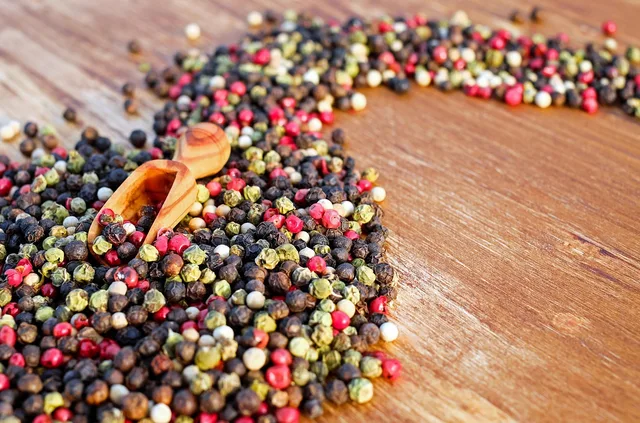
The same arithmetic settles spice purchases, where price per gram rather than tin size is the only comparison that survives a change of packaging.
Then compare like with like: a thick paste and a pourable sauce are not the same purchase per ounce. One goes by the teaspoon, the other by the tablespoon.
Water content is the quiet variable. A sauce reduced hard costs more to make and goes further on the plate, so a higher unit price can be the cheaper way to season a meal.
Work out how many servings a jar gives you in your own kitchen, then compare cost per serving. That number moves the ranking more often than the shelf price does.
Our tasting method settles whether the more expensive jar earns the gap, and the category overview covers which of those claims can be checked at all.