Industry
Part of American spice blends by style family: five value criteria and enforceable label claims
A Process Primer for American Spice Blends Makers
American spice blends makers can use this process primer to check incoming spices, grind and mix to formula, control allergens, and keep buyer-ready records.
What to take away
- Dry blending looks simple and is mostly a sourcing and record keeping business.
- Intake checks matter more than mixing technique, because a blend cannot be better than what went into it.
- Allergen control and cross contamination are the main hazards, followed by contaminant residues on incoming material.
- Buyers ask for a quality system long before they ask about flavor.
Sourcing and intake
For American spice blends makers, the real skill is buying, and whole spices arrive from importers or regional growers. The first job is checking what turned up: correct variety, grade, and aroma.
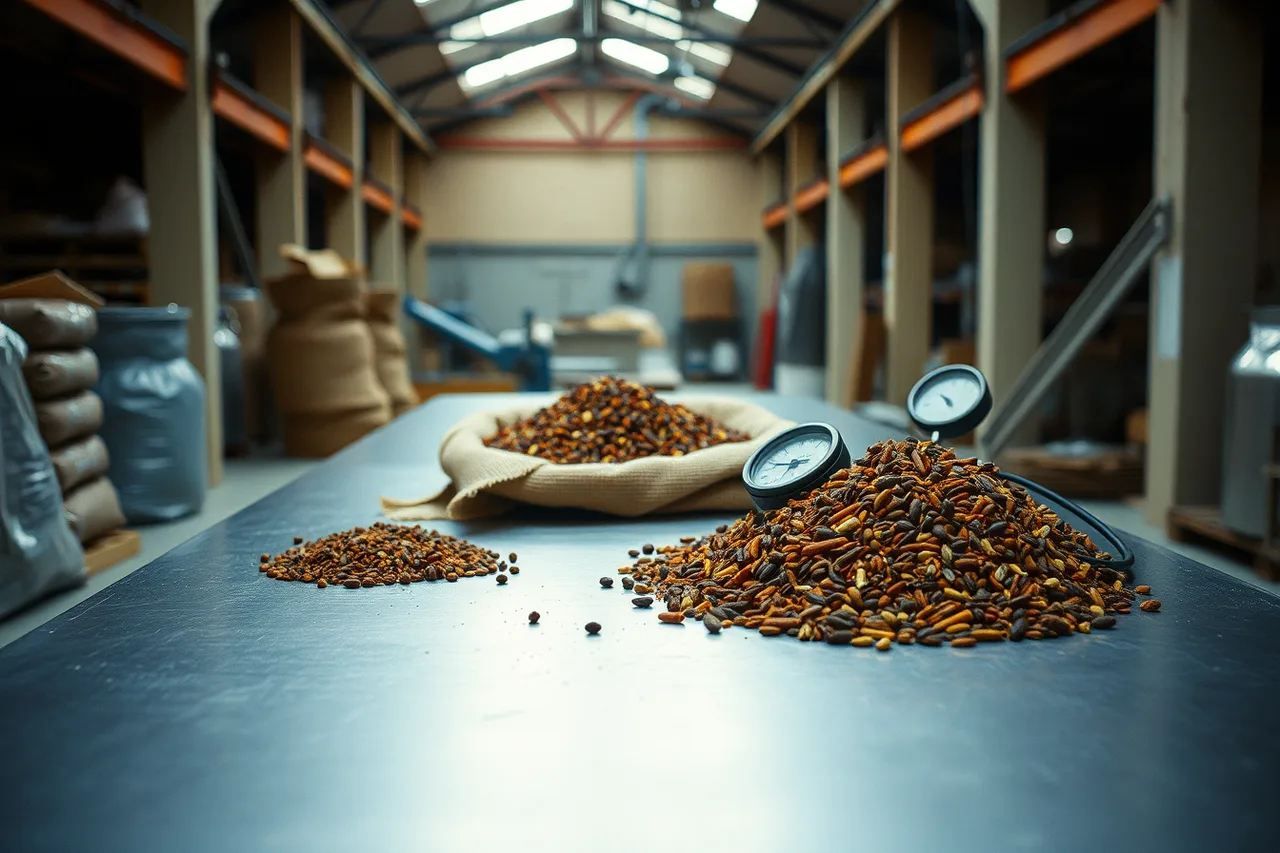
No damp, no infestation, correct paperwork. A supplier who cannot supply a specification will surprise you.
Variety is the check most easily waved through: compare the supplier’s identity and variety claims with the purchase specification and paperwork, rather than treating a named variety on a label as a promise of quality.
Contaminant risk sits at this stage too. The National Agricultural Library's collection on chemical contaminants gathers USDA research on residues and contaminants in food, including pesticide residue research projects.
That background explains why a serious blender asks for supplier documentation instead of accepting a pallet on trust.
Grinding and mixing
Whole spices are ground close to the mixing date where possible, because ground material loses aroma quickly.
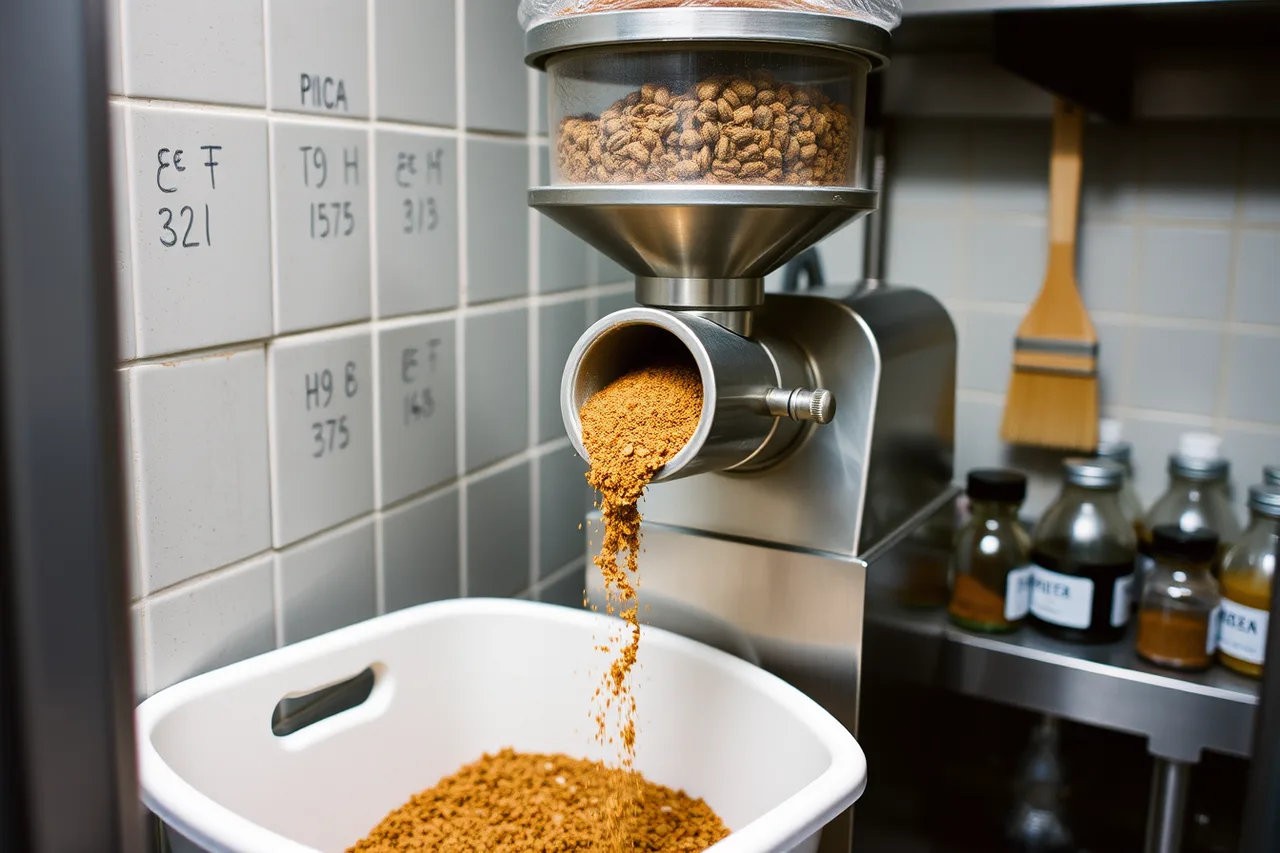
Grind size is a specification, not a preference: it decides how a blend coats, how fast it releases, and how evenly it disperses. Mills are cleaned between materials, and strongly aromatic ingredients run last for the same reason a kitchen cuts fish last.
Mixing follows a written formula in grams, with each ingredient weighed and recorded. Blend time is specified, because under mixing leaves streaks and over mixing can heat the material. Every batch gets a code, and a sample is retained.
Scale changes the method more than people expect. A blender making five kilograms can weigh every ingredient into one vessel and mix by hand.
At fifty kilograms, minor ingredients must be premixed with a carrier so they disperse. A few grams of a potent ingredient will not spread evenly through a large mass. Blends that taste inconsistent from spoon to spoon failed at that step.
The hazards that actually matter
- Allergens. Sesame and tree nuts are major food allergens under U.S. federal law. The Food Allergen Labeling and Consumer Protection Act, as amended by the Food Allergy Safety, Treatment, Education, and Research (FASTER) Act, requires them to be declared when present in packaged food. Mustard and celery can also trigger reactions and must be accurately listed as ingredients.
- Cross contamination between blends, particularly where one contains an allergen and another does not; prevent cross-contact through appropriate controls.
- Moisture, which allows mold growth in stored material.
- Metal and foreign material, controlled by sieving and by magnets on the line.
- Mislabeling, which is a paperwork failure with real consequences.
The quality system buyers ask about
Once a blender sells to shops or kitchens, attention turns to systems. NIST's Manufacturing Extension Partnership describes ISO and quality management services: quality management system implementation, internal audit setup and training, plus standards that customers, industries, or regulators often require.
A small blender does not need certification on day one. It will usually need a documented system sooner than expected.
The practical version is modest: a written formula per product, a batch record per run, a supplier list with specifications, a cleaning schedule with signatures, and retained samples. That set answers most buyer questions. Kitchens ask a narrower set again, weighted toward consistency across three consecutive deliveries and a clear position on shared equipment.
Where blending differs from sauce making
Dry blends do not have the thermal-process and acidification questions that often shape sauce safety. Their controls instead focus on ingredient identity, allergen cross-contact, moisture, and physical contaminants. The sauce production walkthrough covers recordkeeping practices shared across products, while the blend comparison guide approaches finished blends from a buyer’s perspective.