
Industry
Part of 4 things to understand about specialty seasoning ideas
Specialty Seasoning Ideas Businesses Can Vet for Foodservice
Specialty seasoning ideas businesses can test for foodservice, from citrus-chile salt to sesame-ginger blends, with checks for consistency, allergens and use.
What to take away
- Foodservice buys consistency first. A blend that varies between deliveries is worse than a duller blend that never moves.
- Pack size and yield per portion decide the real cost, not the price per pound.
- Allergen documentation is a gate, not a preference. Without it the conversation stops.
- Supply reliability beats novelty. A kitchen that has printed a menu cannot swap an ingredient midweek.
The buyer is solving a different problem
Specialty seasoning ideas businesses consider for foodservice need to perform consistently in the kitchen, not just look interesting on a retail shelf. That difference shapes how a blend is evaluated, priced, and documented.
A home cook wants an interesting jar. A kitchen wants a component that behaves the same way on a Tuesday in February as it did in September, in the hands of whoever is on shift. That difference explains most of what looks like conservatism in foodservice buying.
Specialty seasoning concepts to trial
Treat these as concepts for a blender sample, not finished formulas; test each in its intended dish and service conditions.
- Citrus-chile finishing salt:Dried citrus peel, chile, and salt for grilled fish or roasted vegetables. Check an open station pack for clumping or separation; if either makes the dose inconsistent, it fails the station-use test.
- Smoked paprika, cumin, and coriander rub:A savory seasoning for beans, chicken, or roasted vegetables. Taste it in the actual dish after the kitchen’s holding and reheating cycle, not only straight from the jar.
- Sesame-ginger-garlic blend:A concept for rice or noodle bowls. Sesame is a major allergen, so ask for an allergen statement and a clear shared-equipment position before the kitchen trial.
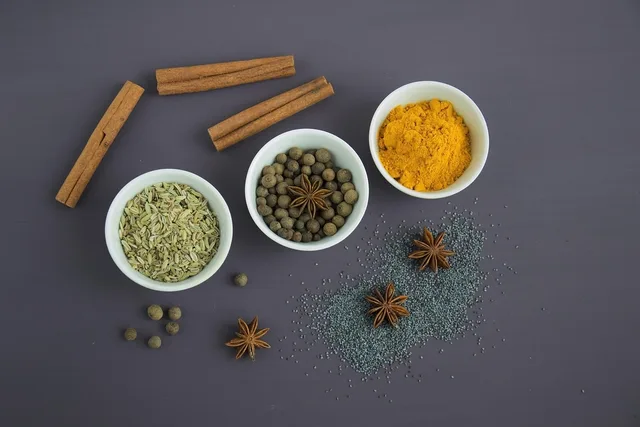
- Fennel, black pepper, and chile blend:A concept for tomato-based beans or roasted mushrooms. Check whether the particle size stays evenly distributed and whether the flavor suits the dish at the planned portion.
The USDA page on foodservice market segments provides context about the kinds of outlets a blender may approach, but market size alone cannot establish demand for a particular blend. Start with the menu and service workflow instead.
What a foodservice buyer checks
- Batch to batch consistency, usually proven with three consecutive deliveries.
- Pack size that matches a station, so nothing sits open for weeks.
- Yield per portion, expressed in grams per cover.
- An allergen statement and a clear position on shared equipment.
- Lead time and the ability to hold stock.
- Whether the blend survives the kitchen's actual process, including holding and reheating.
Ask the maker to keep a retained reference jar; comparing it with delivered lots makes drift visible and helps catch differences before they reach the kitchen.
Bars add two requirements of their own. A rim or shaken-drink blend must dissolve or adhere predictably. It must also survive fast handling by someone who is not measuring.
A rim salt that clumps in humidity, or a blend whose particle size separates in the jar, will be abandoned within a week however it tastes. Test both conditions before you pitch.
The paperwork a kitchen will ask for
Before a chef cooks with a blend, someone on the purchasing side asks for documents. The product specification sheet defines the blend: ingredients, particle size, salt level, pack format. The certificate of analysis (COA) covers a single lot and is the only proof that the batch in the box matches that specification, which is why kitchens ask for one with each of the first three deliveries.
Allergen paperwork is where most trials stall. An allergen statement alone is not enough; buyers want a continuing letter of guarantee that covers the blend, the shared-equipment position on the mill line, and the cleaning routine between runs. The FDA requires the major allergens — milk, egg, fish, crustacean shellfish, tree nuts, peanuts, wheat, soybeans, and sesame — to be declared on the label. The original federal allergen-labeling statute was the Food Allergen Labeling and Consumer Protection Act (FALCPA).
Food safety documentation sits behind that. A blender subject to the FDA Food Safety Modernization Act (FSMA) preventive-controls rule must keep a written food safety plan, and many kitchens also recognize a HACCP plan. Ask whether the plant is audited against a GFSI-benchmarked scheme such as SQF or BRCGS; that certificate is the closest thing to an outside opinion on the whole file.
Restaurant buyers also answer to their own inspector. State and local health departments enforce the FDA Food Code as adopted in their jurisdiction, so a blend that arrives without allergen documentation is a problem the kitchen has to answer for at its next inspection. If the blend is imported, the importer carries the FSMA Foreign Supplier Verification Program obligation, and the paperwork should follow the blend.
Two documents decide deals the spec sheet never mentions: a certificate of insurance showing product liability coverage with the kitchen named as an additional insured, and a written indemnity clause. Ask early — those are routine requests in foodservice, not a sign of distrust.
The cost calculation that decides it
Kitchens do not compare price per pound. They compare cost per cover. A blend used at one gram per plate at forty dollars a kilogram costs four cents a plate. A cheaper blend used at three grams can cost more. Bring that number to the meeting already worked out, with a portion weight the chef can check. Ask for the price per kilogram and the pack weight in writing for every option you are comparing, then run the same arithmetic across all of them; the cheapest line on a price list is rarely the cheapest plate.
Cost per cover, not per pound
Blend A
- Price per kg
- $40
- Grams per plate
- 1 g
- Cost per plate
- 4 cents
Blend B
- Price per kg
- cheaper
- Grams per plate
- 3 g
- Cost per plate
- more
Supplier continuity is separate from seasoning performance. The Small Business Administration’s business-management guidance offers general operating context, but the product decision still rests on the written specification, lot records, and trial results.
How buyers can run a trial with a shop or bar
Set the trial around the kitchen's menu cycle. Ask when the menu changes, arrange a tasting between services, and leave time to test the blend before a menu is printed. A sample introduced after the menu is set may have no immediate place, even if it tastes good.
Before the trial, ask for the blend, its portion weight, an allergen sheet, and a sample in the pack size offered for sale. Test it in the intended dish and portion.
Test when the seasoning goes into the dish. The timing that decides whether a blend belongs in the pan or at the table should match the kitchen's intended use.
Agree on a three-delivery trial and a written review date. Before the first order, get the supplier's lead time and minimum order in writing, and ask what happens if supply is interrupted. Compare each delivery with the original sample and specification.
This guide focuses on kitchen trials rather than retail-channel planning; see our subscription and retail channel notes for the latter. For more seasoning concepts, see the seasoning ideas list, then use the foodservice tests here to assess whether a concept suits a menu.